 Sacred Trails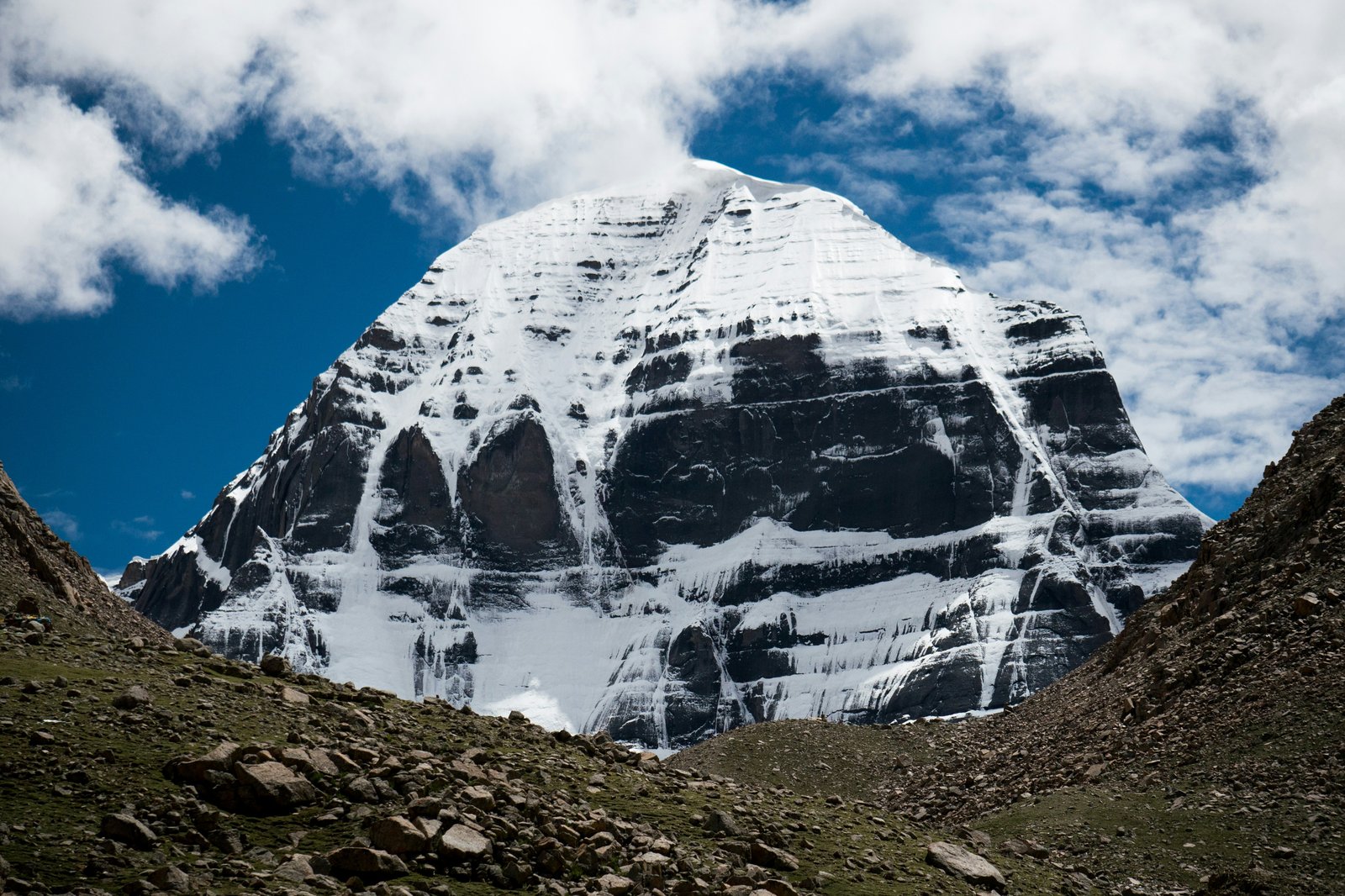
There's a mountain in western Tibet that four different religions call sacred, that sits near the source of four of Asia's greatest rivers, and that no one — not one recorded person — has ever stood on top of.
Mount Kailash is holy to Hindus as the home of Shiva, to Buddhists as the mythical Mount Meru, to followers of Bon as the abode of a sky goddess, and to Jains as the place their first Tirthankar found liberation. The pilgrimage around it — the kora — is a 53-kilometre circuit starting and ending at Darchen, at 4,670 metres. Most walk it in three days; the most devoted complete the entire circuit through full-body prostrations, a journey that can take three weeks.
The high point is Dolma La pass at 5,650 metres, where pilgrims chant as they cross, and where the thin air makes every step a small negotiation with your own body. Nearby Lake Manasarovar, the highest freshwater lake in the world, mirrors the peak on still mornings.
And the summit itself stays untouched — even China's mountaineering authorities prohibit climbing it, and Reinhold Messner, one of the greatest mountaineers alive, turned down the chance rather than be first.
This is trekking as pilgrimage in its purest form: a mountain you walk around, never up, alongside people for whom every step means something the rest of us can only try to understand.
Some mountains are only meant to be walked around.